Just How Sleepy or Sleepless Are We?
Before we get into how sleep culture is changing across the globe, it is important to understand where things stand presently. So, how much or how little sleep are people getting? To start with, it is important to note that sleep cultures differ across the globe. For example, in the Anglo-American context, taking naps is seen as a sign of laziness, while in Mediterranean cultures, taking naps during the day is quite the norm. Putting these regional nuances aside, our current sleep culture is a bit of a conundrum as people are pulled in different directions, as follows:
Productivity Over Health
In the wake of hustle culture and rising costs of living, it comes as no surprise that millions of people are trading in their sleep for more working hours. You see, as people try to scale corporate ladders, increase their business revenue, keep a roof over their heads, and chase after other monetary goals, they push their bodies to their limits through late nights, early mornings, and long working hours, such that they barely have time for sleep. Some people even go as far as seeing sleep as an inconvenience rather than the necessity it is. Thanks to this, sleep deprivation has become the norm, and many people have no trouble wearing their sleep debts as a badge of honor. Interestingly, this same sleep debt takes a toll on their physical, mental, and emotional health, such that they not only put themselves at risk of diseases but also burnout.
Sleep as a status symbol
As more people have become aware of the impact of sleep on their health, they have learned that getting more shut-eye is the key to thinking, feeling, and moving better. So, while some people readily sacrifice their sleep to work more hours, others have taken on a different approach where they include quality sleep in their wellness strategies. On the small scale, people have embraced sleep hygiene approaches such as technology boundaries and blackout curtains to create optimal sleep environments. And on the larger scale, some people have taken it as far as treating their sleep like lab work, such that they even sleep in controlled chambers with timed naps and precise sleep schedules. With CEOs, athletes, and other top individuals in society treating sleep like a bio hack, sleep has now become somewhat of a status symbol, which is now something to be perfected rather than experienced.
Identifying with sleep
Many people are guilty of identifying with their sleep patterns such that they will readily say things such as ‘I am not a morning person’ or ‘I am a night owl.’ While these may seem like simple statements, they are identities that people embrace and use to determine their lifestyles. For example, a person who believes that they are an early bird will get up early to keep up with this identity and will show up in society as an early bird, even going ahead to seek out other people who share this belief. At the same time, someone who has a negative sleep pattern, such as insomnia, may readily accept this as the norm and will, therefore, show up in society as an insomniac, which is something that other people can relate to. Thus, there is a tendency for people to tie their identities to sleep patterns and form communities around them, even when the same patterns may be a cause for concern. And these identities often relate to how people approach sleep, such that those who see it as an inconvenience will identify with others who share this mindset, while those who prioritize it will associate with those who feel the same way.
As a whole, our culture defines how people feel about sleep, which determines whether they prioritize it. The current sleep culture is such that on the one hand, we have people glorifying exhaustion over rest, and on the other hand, we have people treating sleep as a status symbol to which others should aspire. In between, we have people identifying with their sleep patterns while navigating a society in which the norms either penalize or celebrate rest. Since most people are caught up in the hustle culture, many people are in a state of chronic sleep debt. Unfortunately, this sleep deprivation puts them at a disadvantage and predisposes them to health conditions such as obesity and diabetes, while also hampering their creativity and productivity and putting a strain on their relationships.
Redefining Sleep Culture in the Modern Age
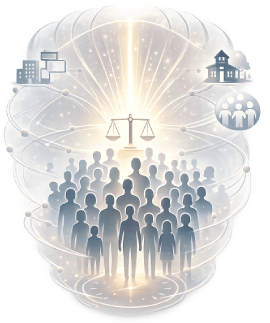
We can agree that our current sleep culture is quite a paradox, as we have different mindsets when it comes to sleep, with most people falling into the opposite extremes. But does this matter? Why, yes!
According to decades of research, sleep culture does not just affect the individual members of society but also the community as a whole. When a society does not prioritize sleep and other forms of rest, its people suffer mentally, physically, and emotionally, all of which hold the society back. Sleep-deprived people are not only more likely to pose public health risks, such as drowsy driving and workplace errors, but they are also more likely to make impulsive and dangerous decisions. What’s more, sleep-deprived people have a negative effect on the economy as they impose a higher burden on the healthcare system through direct and indirect costs, are less productive at work, and are more likely to make costly mistakes in their places of work.
On the contrary, when people treat sleep as a luxury, it creates the notion that sleep is not a necessity but rather an indulgence that only the wealthy in society can afford. Again, this prompts people to put their heads down and work harder so that they, too, can ‘afford’ to sleep, which compounds the sleep deprivation problem.
Luckily, the key to having a more resilient and healthier society does not lie in any of these extremes. Instead, it comes down to finding a balance between the two, where people are able to get enough rest while still carving out enough time for their financial, relationship, health, and other goals.
Here are the ways in which communities are guiding their members on this balance in this modern age:
Spreading Community Awareness
People tend to adapt to the culture around them, be it in what they eat or how they dress, as they normalize what they deem to be common. Take the example of taking a video of yourself in public. A while back, people would have thought that you were acting strange. But now, if you set up your phone and start dancing in public, people will assume you are making content or having a video call, and they will think nothing of it. And that is because we, as a society, have normalized content creation, video calls, and the like.
This normalization also applies to sleep, such that people tend to mirror the people around them. If people start bragging about pulling all-nighters online, then others follow suit. And when the in-thing becomes resting 9 hours every night, then people start unplugging earlier than before. Therefore, to change people’s perceptions about sleep, communities must address the norms surrounding the same, which they are doing through the following strategies:
Running Public Health Campaigns
In this digital age, there are many people who think that sleep deprivation is proof that they are working hard and will be successful. Some people even shame others for sleeping the recommended number of hours. But what they may not know is that sleep deprivation comes with many downsides, including but not limited to chronic illnesses, workplace accidents, and burnout. Through public health campaigns, governments and non-governmental organizations are able to educate people on the dangers of not getting enough sleep.
Educating Students on Sleep
While many adults struggle with getting quality sleep, the truth is that many of these sleep challenges start much earlier in life and only become evident once they have gotten significantly worse. For example, a teenager who starts sleeping late at night may get into the habit of doing so even when they have early mornings, such that they rack up chronic sleep debt that catches up with them in their twenties or thirties. These problems can even start as early as infancy and can carry on through adulthood, causing several health issues along the way. Thus, schools are now integrating sleep hygiene into their curricula to educate children about the importance of rest so that they can nip these sleep problems in the bud. Often, they include parents in these classes so that they, too, can be aware of the tell-tale signs of poor sleep and can play a role in helping their children enjoy quality sleep.
Advocating for Employee Well-Being
Many employees get so caught up in trying to advance their careers and clinch promotions that they fail to get enough rest. Organizations have previously praised such efforts. But as numerous studies have shown, employees who burn the candle at both ends run a higher risk of lower productivity and workplace errors. As such, more organizations are encouraging their employees to get more rest and are actively taking part in seminars and programs that advocate for the same. We have also seen a rise in flexible work culture that allows employees to take care of themselves while still meeting their work quotas.
As a result of these interventions, more people have adopted healthier routines that are geared towards better sleep, such as limiting their caffeine intake and setting limits on their social media usage. At the same time, those suffering from sleep challenges are facing less stigma around their struggles, and we are seeing more people raise awareness about these issues while also seeking medical help.
Having Public Dialogues
Over the years, we have seen more people talk openly about issues that were previously considered taboo in a bid to raise awareness on these topics and encourage each other to speak up. Not only are people discussing social aspects such as relationships and children, but they are also airing health struggles. Sleep issues have been at the forefront of these health talks in the following ways:
Individual Narratives
Thanks to the power of social media, everyone has a platform on which they can share their story. As such, more people are talking about their relationships with sleep. For instance, those with sleep struggles, such as insomnia, can share with others how this feels and what they are doing about it. At the same time, people who practice good sleep hygiene are sharing their tips with others.
Expert Dialogues
Doctors, psychologists, health experts, and many other people are openly sharing knowledge about sleep through platforms such as websites, podcasts, and traditional TV stations. As more people access this information, they are becoming well-versed about how sleep works and how it affects their overall health.
As expected, these conversations have played a critical role in addressing the stigma that exists when it comes to sleep struggles. For example, if a social media user shares their experiences with depression and how it has affected their sleep, then other people going through similar experiences feel heard and seen. What’s more, it creates a community through which other people affected by similar conditions can find resources on how to improve their sleep.
Beyond breaking the stigma, these conversations have simplified the knowledge on sleep. Without getting technical about brain waves and whatnot, people are able to understand why rest is important and the simple things they can do to rest better every night. And as a cherry on top, these conversations act like a permission slip to others in society. The more that we hear people saying things like ‘I need to sleep early’ or ‘I am unplugging two hours before bed,’ we start normalizing sleep as important rest rather than laziness.
The Role of Shared Responsibility
As we said, sleep culture does not just exist at the individual level, but instead, it extends to the whole community. Therefore, the only way to really change how society approaches sleep is to support each other in making better decisions. Here are the ways that different community stakeholders are playing their part in this change:
Governments
As earlier stated, sleep deprivation poses a public health risk. And that is because it impairs people’s judgment and reaction times. With this in mind, many governments have implemented policies that necessitate rest periods for people working in professions where fatigue can pose a danger to others. Examples of such fields include healthcare workers, truck drivers, and pilots.
Employers
Seeing as sleep-deprived workers actually result in lower organizational growth, many employers have adopted various strategies to help their employees get more rest. These include reducing work hours, setting clear work boundaries, and offering flexible schedules. Some have even added nap spaces to their office setups.
Families
With the help of the community at large, many parents have adopted healthier sleep routines for their families. These changes have proven to be helpful for the whole family, given that when people are getting enough rest, they are better at emotional regulation, which has a positive impact on communication.
Have these strategies changed sleep culture? Yes! In the past, individuals felt like they were working against systems and thus had to bend to their pressures to survive. For example, employees who had long working hours had no choice but to comply with organizational rules even if this meant that they had to forego their sleeping needs.
But with people now treating sleep health as a shared responsibility, sleep is now seen as an activity for the collective good rather than individual gain. As a result, we now have measures such as healthier school policies, community support, government directives, etc. Take the example of the employees again. Where employers have adopted better schedules, employees now have more time to dedicate to caring for their own needs, which allows them to get the rest they need without sacrificing their career goals. Thanks to these and other support systems in society, we are making strides towards a future where more people can enjoy quality sleep.