The Top Sleep Difficulties around the World
According to the most recent sleep estimates for 2025 to 2026, at least 1 billion people in the world face some form of sleep difficulty. And while people are well aware of some common issues, such as insomnia, there are many other widespread sleep barriers that affect millions of people, which often go undiscussed. We take a look at all these and other sleep difficulties to shed more light as to what causes them and who they affect.
Group 1: The Insomnia Family
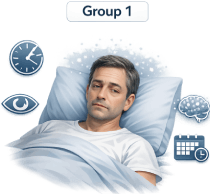
Many people have trouble staying or even falling asleep, and this sleep difficulty, which affects an estimated 10% to 30% of people worldwide, is known as insomnia. It is important to note that insomnia varies in the following ways:
Chronic Insomnia Disorder
In this case, a person’s stress control center is hyper-aroused such that even when they are tired, their brain still pumps out cortisol, orexin, and other chemicals that keep them awake. Eventually, this repeated pattern teaches the brain that the bed is a place to be awake rather than a place to rest. While this condition affects millions of people, it is often seen in women due to their hormonal shifts, as well as in perfectionists who often face difficulty with racing thoughts. Such insomnia can also be a result of depression, as well as lifestyle habits such as doom-scrolling before bed. Doctors will often diagnose this condition in a person who has trouble falling or staying asleep for at least 3 nights a week for a period exceeding 3 months and whose poor sleep has an effect on their physical, emotional, or cognitive state.
Short-Term Insomnia
As we discussed, chronic insomnia is only diagnosable following 3 or more months of sleep difficulties. But what if you have trouble falling or staying asleep for a shorter period? Doctors refer to this as short-term insomnia, which is also known as adjustment insomnia. This sleep challenge often affects people who are going through a period of heightened stress levels, such as breakups, moving to a new house, or starting a new job. Such stressors spike a person’s adrenaline, which gets in the way of the natural sleep cycle. As you can imagine or have already encountered, this issue affects almost every adult at some point in their life and often lasts a few days or weeks. Luckily, it goes away in most cases once the stressor has been addressed. But it has the potential to develop into chronic insomnia, which is why keeping an eye on it is important.
Infants and toddlers can also develop a type of insomnia called behavioral insomnia in which they depend on external cues, such as rocking or having their bottle, in order to fall or stay asleep. Like with adjustment insomnia, this challenge often goes away once the parents have addressed this external reliance through practical but gentle strategies.
Group 2: Sleep-Related Breathing Disorders
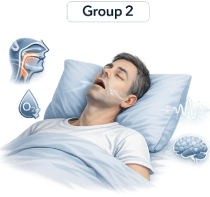
When you fall asleep, your breathing naturally becomes slower and softer. But for some people, breathing entirely stops or becomes so shallow that it puts them at risk of not getting enough oxygen to their brains. Here are the main ways these breathing disorders present:
Obstructive Sleep Apnea (OSA)
When you enter stage 3 of sleep, which is deep sleep, your muscles relax completely, and this includes your tongue and soft palate. In a typical person, this does not affect the airway. But in people with narrow airways, the tongue and soft palate act as a barrier that keeps air from coming in when you inhale. When the brain realizes that the oxygen levels are falling, it triggers an adrenaline release that wakes these people up to keep them from suffocating. This waking and sleeping often leaves them feeling very tired, and some of them may be unaware that they even have sleep apnea, as they may only notice the loud snoring and the frequent waking. This condition tends to affect overweight people and people with large tonsils and recessed chins.
Central Sleep Apnea (CSA)
Unlike with OSA, where a narrow airway hinders breathing, CSA is a result of a neurological failure. You see, whenever your carbon dioxide levels rise, your brain senses this and pushes you to breathe. But for people with CSA, the brain does not sense this and thus does not remind them to breathe, and this delay can happen for up to 30 seconds at a time. So, they just stop breathing, only to wake up feeling breathless and not knowing what happened. To make matters worse, CSA is very quiet, and it’s quite possible to have it and not show any symptoms, save for the waking and breathlessness. It is often seen in people who have heart failure, are on high-dose pain medications, or have recently traveled to regions with high altitude.
Sleep-Related Hypoventilation
While shallow breathing is the norm when sleeping, some people’s breathing is just so shallow that they are unable to get enough oxygen through their bodies. This issue stems from reduced lung capacity and is often seen in people with lung disease, obesity, or neuromuscular weakness. Unlike with CSA or OSA, where people wake up at night, hypoventilation often does not cause waking. Instead, the affected people wake up feeling tired and often have very painful temple headaches. They may also have a bluish tint in their fingertips and lips.
Catathrenia, also known as sleep groaning, also falls into this group and is often seen in young adults. It is not a breathing issue per se, but it presents as one. The people affected tend to make long groaning sounds when they are sleeping, which can often be mistaken for sleep apnea, though it is completely harmless. While these sounds do not disturb them, they can be loud enough to keep others awake.
Group 3: Central Disorders of Hypersomnolence
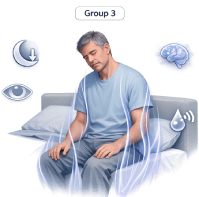
Have you ever come across someone who sleeps a lot but can’t quite seem to feel refreshed when they wake up? Perhaps they are always tired, taking naps, or even spending 12+ hours in bed. Well, they could have a case of hypersomnolence. Here are the common disorders in this category:
Narcolepsy
This sleep disorder comes in two forms. In type 1 of narcolepsy, the body attacks itself and kills off the cells in the hypothalamus that are responsible for making hypocretin, while in type 2, the body has enough hypocretin, but the brain is unable to use it. Hypocretin is the chemical that keeps you awake and is also essential in regulating REM sleep, which is when dreams occur. So, without it, people with narcolepsy are often subject to instances where they feel an overwhelming need to sleep, which can happen even when they are eating or talking. They also tend to experience dreams that are so vivid that they look and feel like real life.
Idiopathic Hypersomnia
Many people in their twenties and thirties have suffered from this condition, which presents as excessive sleepiness. While scientists are yet to understand what causes it, they suspect that it has a lot to do with the brain producing its own kind of sedative throughout the day. As such, even when affected people sleep, they do not get refreshed. In fact, when their alarms go off or when they are woken up, it can take them up to an hour to realize where they are. And even when they do sleep for a long time or take naps, they feel just as tired as when they went to bed.
Kleine-Levin Syndrome (KLS)
This condition, which is also known as the Sleeping Beauty Syndrome, continues to wow scientists with its presentations. While they are unsure as to what causes it, their research has led them to believe that it stems from autoimmune or neurological triggers. Affecting mostly male teenagers, this condition pushes the affected people to sleep for extended periods of time, often averaging 15 to 20 hours a day, and this can last for days to weeks. On top of the unexplained sleepiness, the affected people also tend to exhibit changes in behavior and may act confused, irritable, famished, etc. Then, one day, they wake up and are back to themselves.
Here, we will add the insufficient sleep syndrome that mainly affects young professionals, students, and shift workers. While not a sleep disorder in itself, it results in the same issues you would see with sleep disorders, such as mood changes, daytime sleepiness, and poor productivity. So, what causes it? Well, it is voluntary. People often cut back on their sleep hours to tend to work, relationships, hobbies, and other activities, which results in a mismatch between the amount of sleep they need and the amount of sleep they get. Over time, this can cause chronic sleepiness, which may be mistaken for a sleep disorder but which can easily be corrected with a better sleep routine.
Group 4: Circadian Rhythm Disorders
The circadian rhythm is often a point of reference when it comes to all matters sleep. After all, many sleep experts seem to agree that the best way to perfect a sleep routine is to follow the light and darkness cycles, as these trigger cortisol and melatonin, respectively. But while this may work for many people, it does not for the people with the following sleep disorders:
Delayed Sleep Phase Disorder (DSPD)
We get a lot from our genes, and for people with DSPD, this also extends to their internal clocks. Unlike typical people who have 24-hour days, people with DSPD have longer clocks such that their sleepiness starts much later in the day. As such, they are unable to sleep during the normal times, like 9 or 10 pm, and often sleep past midnight. Where their schedules require them to wake up early, they get less sleep than they need, and this can exhaust them. Usually, this condition affects teens, and they grow out of it in early adulthood, but it can be permanent in some cases.
Advanced Sleep Phase Disorder (ASPD)
While people with DSPD are staying up late waiting for their melatonin to kick in, those with ASPD have the opposite problem. In their case, their melatonin release happens much earlier than that in typical people, such that they end up sleeping in the early hours of the night, such as at 6 or 7 pm. The problem with this is that their cortisol release is also early, such that they wake up before dawn and can even be up as early as 2 am. This problem often affects older adults.
Non-24-hour Sleep-Wake Disorder
The standard circadian rhythm heavily depends on light and darkness to regulate the release of cortisol and melatonin. So, in the absence of these two, the body has to set its own rhythm, as is the case with many blind people, as well as people with neurological issues. You find that their sleep rhythms often change such that one week, they may match the typical sleep routines, and the next week, they are sleeping all day.
And finally, we have the shift work disorder. Many people who work night shifts sleep during the day. Essentially, they ask their bodies to make melatonin when the sun is out and cortisol when the darkness has set in, which confuses the brain. You find that even as the brain adjusts, it does not do so efficiently, and shift workers often experience issues such as insomnia while trying to sleep and sleepiness when they are at work. Unfortunately, this mismatch has been linked to several health issues, such as heart disease, as the body is unable to adequately repair itself during sleep.
Group 5: Sleep-Related Movement Disorders
Usually, when people fall asleep, they tend to remain in place, save for the occasional movement as they stretch or turn. But for some people, the movement is a bit more obvious and disruptive than this, as follows:
Restless Leg Syndrome (RLS)
This condition often results from low dopamine levels, low iron levels, or genes. It presents as discomfort in the legs, which has been described in many ways, including the feeling of ants crawling on the bones, and this makes affected people feel the urge to walk or stretch. Understandably, it makes falling asleep quite hard.
Periodic Limb Movement Disorder
Older adults often complain of this sleep challenge, which presents as the jerking of the big toe or ankle every 20 to 40 seconds on average. These movements arouse them from their sleep and make it hard to stay asleep. It is important to note that this disorder often presents alongside RLS.
Buxism
You may have heard of this condition by its common name: teeth grinding. It is often caused by high levels of stress or breathing issues, which cause the jaw to clench, either to relieve the stress or to keep the airway open. Affected people often experience tension headaches and sensitive teeth when they wake up. Given its causes, it mainly affects people with stressful jobs as well as those with airway problems.
Some people also suffer from sleep-related leg cramps, which cause painful knotting in the calves or foot muscles, and are often the result of dehydration or low electrolyte levels. When these happen, these people have to get up and stretch to relieve the pain.
Why Awareness Matters
Sleep is an essential part of our lives as it not only helps us repair our bodies but also process emotions and consolidate what we have learned on a daily basis. When sleep disorders present, they get in the way of these processes, and this has been shown to pave the way for several issues. Take the example of dementia. Research shows that poor quality sleep, which lacks enough stage 3 sleep, has been linked with this condition. That’s because if you are not sleeping deeply, then the brain does not have enough opportunities to clear out the waste, and this also includes Beta-Amyloid, which is the protein associated with Alzheimer’s. Heart failure is another health issue that can result from poor sleep. It is especially likely in the presence of conditions like sleep apnea, which force the heart to work against a vacuum and can cause its walls to thicken over time.
These are but some of the many health conditions that can stem from poor sleep, as each sleep disorder presents its own unique potential side effects. It is thus important for people to not only take note of changes in their sleep patterns but also their daytime mental, physical, and emotional states, as these can help them understand whether their sleep is restorative. Discussing these changes with a doctor is also important so as to determine what is best addressed with lifestyle changes and what may require medical intervention.